Solar panels are often marketed as a low-maintenance technology, and in one sense, that is true, they have no moving parts and operate silently for decades. But “low maintenance” is not the same as “no maintenance.” A solar PV system is a precision energy asset, and like any asset of that scale, it performs best when it receives structured, professional attention.
A solar maintenance service typically includes panel cleaning, physical and electrical inspections, inverter testing, wiring checks, performance data analysis, and safety assessments. Most providers recommend scheduling this at least once a year, with additional cleaning visits depending on site conditions.
This guide breaks down everything a professional solar maintenance service covers, why each element matters, and what commercial and industrial operators in the UK should be asking their service providers. Whether your system was installed last year or has been running for a decade, understanding what good maintenance looks like is the first step to protecting your energy investment.
Key Takeaways
- A solar maintenance service is more than panel cleaning. A complete service covers the panels, mounting system, inverter, cabling, switchgear, monitoring platform, and safety controls to confirm the system is working as designed.
- Most commercial solar systems should receive a full professional service at least once per year. Sites exposed to agricultural dust, coastal salt, industrial pollution, or heavy bird fouling may need cleaning every six months or more frequently.
- Panel soiling can reduce solar output if dirt, pollen, lichen, bird fouling, or airborne particles block sunlight from reaching the cells. Professional cleaning uses purified water and non-abrasive tools to protect the panel surface and measure generation improvements before and after cleaning.
- Inverter testing is a critical part of solar maintenance because the inverter is one of the most failure-prone components in a PV system. A professional service should review fault logs, voltage and current readings, conversion efficiency, cooling systems, firmware, and warranty status.
- Electrical checks reduce safety risks on high-voltage commercial solar systems. Engineers inspect DC and AC cables, MC4 connectors, isolators, fuses, insulation resistance, earthing, and, where relevant, HV/LV infrastructure
TL;DR
A solar maintenance service protects commercial solar PV performance by combining panel cleaning, inspections, inverter testing, wiring checks, monitoring review, and safety compliance checks. For UK businesses, regular maintenance helps prevent avoidable energy losses, supports warranty compliance, and identifies faults before they become costly system failures.
What Is a Solar Maintenance Service and Why Does It Matter?
A solar maintenance service is a scheduled programme of inspection, testing, and upkeep carried out by qualified engineers on a solar PV system. It covers every major component from the panels on the roof or ground mount through to the inverter, cabling, switchgear, and monitoring platform.
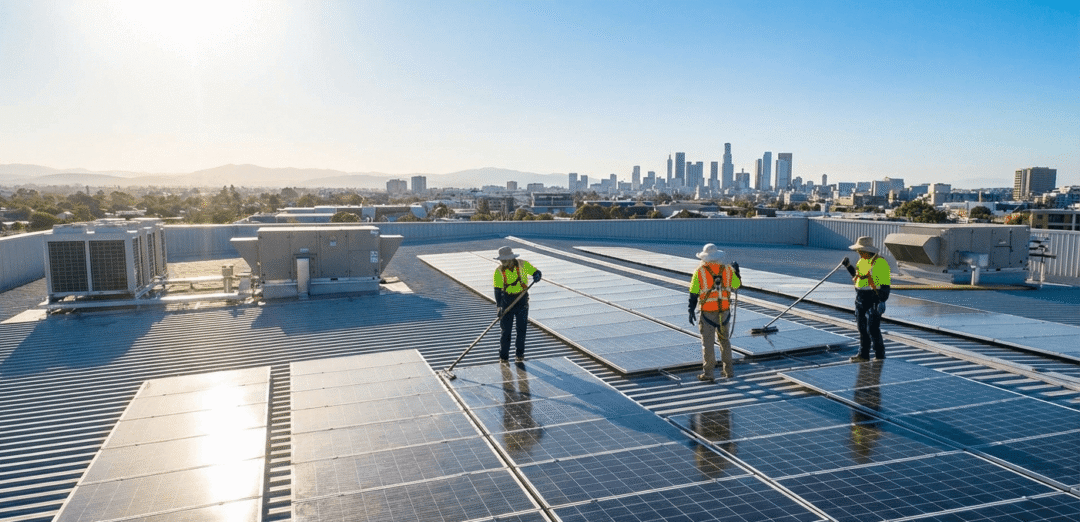
The purpose is not simply to keep things clean. It is to verify that the system is generating the output it was designed to deliver, that no safety risks have developed over time, and that any degradation or faults are caught before they become expensive problems.
According to the National Renewable Energy Laboratory (NREL), solar panels degrade at an average rate of around 0.5% per year under standard conditions. Without maintenance, that rate can accelerate due to soiling, shading, or undetected faults. For a commercial system generating hundreds of thousands of kilowatt-hours annually, even a 5% output loss translates into a significant financial impact over time.
Regular maintenance also has implications for warranty compliance. Many panel and inverter manufacturers require evidence of professional servicing to honour warranty claims. Skipping annual visits can inadvertently void the cover on equipment that cost tens of thousands of pounds to install.
What Does a Solar Maintenance Service Include?
A comprehensive solar maintenance service covers six core areas. Each one addresses a different failure mode or performance risk, and a credible provider will document findings from all of them in a written report.
1. Solar Panel Cleaning
Panel cleaning is the most visible element of a solar maintenance visit, but it is more technical than it looks. Over time, panels accumulate layers of dust, pollen, bird fouling, lichen, and airborne particulates. These deposits scatter and absorb incoming sunlight before it reaches the solar cells, reducing the amount of energy the system can generate.
On sites near agricultural land, motorways, or coastal areas, soiling losses can reach 15% to 25% in heavy contamination scenarios, according to research published by the Solar Energy Industries Association (SEIA). Even in lower-pollution environments, a film of general grime will measurably reduce output year-round.
Professional cleaning uses deionised or purified water, which leaves no mineral residue on the glass surface. Technicians use soft-bristle equipment designed not to scratch the anti-reflective coating that helps panels absorb more light. Most providers will carry out a before-and-after output comparison to quantify the generation improvement achieved.
What panel cleaning typically includes:
- Full wash of all panel surfaces using purified water
- Frame and junction box exterior wipe-down
- Removal of any moss, lichen, or heavy soiling with appropriate non-abrasive methods
- Pre and post-clean output comparison to confirm effectiveness
Impact of soiling on solar output by environment type
| Site Environment |
Estimated Soiling Loss (Annual) |
Recommended Cleaning Frequency |
| Urban/suburban |
2% to 5% |
Once per year |
| Rural/agricultural |
5% to 15% |
Twice per year |
| Coastal/industrial |
10% to 25% |
Two to three times per year |
| Near major roads |
5% to 12% |
Twice per year |
Source: Based on industry research from NREL and field data across UK commercial sites
2. Physical Inspection of Panels and Mounting Systems
Beyond cleaning, a qualified engineer will conduct a detailed visual inspection of every panel and the mounting structure that holds them in place. This is not a cursory walkthrough. It involves close examination of panel surfaces, frames, connectors, and structural fixings to identify any physical deterioration that could reduce output or create a safety hazard.
Roof-mounted systems are subject to wind loading, thermal cycling, and UV exposure year after year. Over time, mounting rails can shift, fixings can corrode, and panel frames can develop micro-cracks that are invisible from the ground. A technician on the roof with the right knowledge will spot issues that an automated monitoring platform cannot detect.
What the physical inspection covers:
- Panel surface condition: cracks, delamination, discolouration, and hot spot signs
- Frame integrity: dents, corrosion, or structural deformation
- Mounting hardware: loose bolts, rail alignment, and anti-corrosion coating condition
- Roof penetrations and flashings: checked for signs of water ingress
- Pest and bird activity: nesting beneath panels causes cable damage and shading losses
For ground mount solar systems, the inspection also covers pile and frame integrity, vegetation encroachment, and ground erosion around support structures.
3. Inverter Inspection and Testing
The inverter is the most failure-prone component in any solar PV system. It converts the direct current (DC) produced by the panels into alternating current (AC) that can be used on-site or exported to the grid. When an inverter develops a fault, the entire system or a significant portion of it can stop generating power, often without any obvious visible sign.
A professional solar maintenance service will include a detailed inverter assessment that goes well beyond checking whether the display shows a green light.
What inverter testing covers:
- Fault log and error code review: identifies recurring issues or developing faults
- Input and output voltage and current readings: compared against system design specifications
- Efficiency rating verification: confirms conversion efficiency has not degraded
- Cooling system check: fan operation, ventilation clearances, and heat management
- Firmware version review: some providers update inverter firmware as part of the service
- Warranty status: flagged if the inverter is underperforming relative to its guaranteed output
For systems using microinverters or DC power optimisers, each unit is assessed individually. This is particularly important for sites where partial shading or soiling affects individual panels rather than whole strings.
EvoEnergy’s optimisation service can extend beyond a standard maintenance visit to identify deeper performance improvements, including inverter replacements or control system upgrades.
4. Electrical and Wiring Safety Checks
Solar PV systems operate at high voltage. DC cables running from the roof array to the inverter can carry voltages in excess of 600V in a commercial installation. The electrical safety check carried out during a solar maintenance service is therefore not a formality. It is a critical review of every component in the electrical pathway.
UV exposure causes cable insulation to become brittle and crack over time. Thermal cycling causes connector joints to expand and contract repeatedly, loosening their grip. Pests such as squirrels and birds are known to gnaw through cable sheathing, particularly on roof-mounted arrays. Any of these degradation pathways can lead to arc faults, system shutdowns, or, in extreme cases, fire.
What the electrical check covers:
- DC and AC cable condition: inspected for UV damage, abrasion, and pest activity
- MC4 connector integrity: checked for corrosion, water ingress, and secure mating
- Junction box seals: waterproofing condition verified
- Isolator and fuse operation: all DC and AC isolators tested for correct function
- Insulation resistance testing: measures cable insulation integrity across the system
- Earth continuity testing: confirms the system earthing remains effective and compliant
For larger commercial sites with HV/LV infrastructure, the maintenance visit may also include a review of switchgear, distribution boards, and protection relay settings.
Most commercial solar installations include a monitoring platform that logs generation data in real time. The data that accumulates over months and years is one of the most valuable diagnostic tools available. A skilled engineer reviewing that data during a maintenance visit can identify trends that are invisible in day-to-day monitoring.
A string that has been consistently underperforming for three months may point to a failing panel, partial shading from a new structure, or a loose connector. A gradual decline in peak output compared to the same period in previous years may indicate soiling, inverter degradation, or cell delamination. These patterns only become visible when someone with technical expertise sits down and analyses the data properly.
What the performance monitoring review covers:
- Monthly and annual generation data versus expected output for the site location
- String-level or panel-level performance comparison (for microinverter and optimiser systems)
- Identification of underperforming panels, strings, or inverter channels
- Yield loss attribution: soiling, shading, component degradation, or inverter faults
- Performance ratio calculation: actual output versus theoretical maximum for the period
EvoEnergy’s aftercare service includes ongoing remote monitoring with expert interpretation, so anomalies are flagged between scheduled visits rather than waiting for the annual inspection.
6. Safety Assessment and Compliance Check
A solar maintenance service is not complete without a structured safety review. UK solar installations must comply with a range of standards including BS 7671 (IET Wiring Regulations), the Electricity at Work Regulations 1989, and the requirements set out by the Distribution Network Operator (DNO) for grid-connected systems.
As systems age and electrical codes are updated, what was compliant at the time of installation may need to be reviewed. A competent maintenance provider will flag any areas where the system no longer meets current standards and recommend appropriate corrective action.
What the safety assessment includes:
- Switchboard and isolator compliance review
- Surge protection device (SPD) condition and effectiveness
- Signage and labelling verification: all circuit identification labels present and legible
- Emergency shutdown procedure check
- Thermal imaging scan (where included): identifies hot spots in panels or connections before they cause failure
- Fire risk assessment of cable routes and inverter location
Thermal imaging is particularly valuable and distinguishes a basic maintenance package from a thorough one. A thermal camera identifies temperature anomalies in panels, connectors, and electrical cabinets that are invisible to the naked eye. Hot spots in solar cells are a leading indicator of cell failure and can be addressed proactively before the panel is lost entirely.
How Often Does a Commercial System Need Attention?
The correct frequency for a solar maintenance service depends on the system type, site environment, and the age of the installation. The table below provides a practical reference for UK commercial operators.
| Maintenance Activity |
Recommended Frequency |
Notes |
| Professional panel clean |
Every 6 to 12 months |
More frequent on agricultural, coastal, or high-pollution sites |
| Full visual and physical inspection |
Annually |
Combined with cleaning visit where possible |
| Inverter inspection and testing |
Annually |
More frequent if fault logs show recurring issues |
| Electrical safety check |
Annually |
Full insulation resistance test every 3 to 5 years |
| Performance monitoring review |
Quarterly or continuously |
Ongoing remote monitoring is best practice |
| Thermal imaging scan |
Every 1 to 2 years |
Useful after hail, high-wind events, or if output has dropped |
| Battery system inspection |
Annually |
For sites with BESS installed alongside solar |
| Post-weather event inspection |
After severe weather |
Hail, storm winds, or lightning strikes warrant an unscheduled visit |
Frequency recommendations are indicative and should be confirmed with your maintenance provider based on specific site conditions.
Signs That Your Solar System Needs Attention Between Scheduled Visits

Annual maintenance is the baseline, but certain signals should prompt an unscheduled service call. Identifying these early can prevent a minor issue from becoming a costly system failure.
Contact your solar maintenance service provider if you notice:
- A sudden or sustained drop in generation output visible in your monitoring app
- Inverter fault lights, error codes, or unexpected shutdowns
- Physical damage following a storm, hail event, or high winds
- Unusual sounds from the inverter: buzzing, clicking, or intermittent humming
- Any sign of moisture, condensation, or discolouration inside panels
- Electricity bills that have risen without a clear change in site consumption
- Monitoring data showing a string or section of the array producing significantly less than the rest
None of these issues should be approached as DIY repair tasks. Solar PV systems operate at high voltage and require qualified engineers with appropriate test equipment.
Protect Your Solar Investment with EvoEnergy’s Professional Aftercare Service
A solar PV system is one of the most significant capital assets on any commercial site. It should perform at or near its design specification for 25 years or more. Achieving that requires a structured, professional maintenance programme, not just a clean every couple of years when someone notices the panels look dirty.
EvoEnergy provides a comprehensive aftercare service for commercial and industrial solar installations across the UK. Our engineers are experienced across rooftop, ground mount, and carport solar systems, and can maintain battery storage, EV charging infrastructure, and HV/LV switchgear under a single contract.
Every maintenance visit is documented with a full written inspection report, test results, and clear recommendations. Remote monitoring between visits means we identify anomalies before your next scheduled service, not after.
If your system is due for a service or you want to understand what a proper solar maintenance contract looks like for your site, contact the EvoEnergy team today for a no-obligation assessment. You can also explore our solar consultancy service if you are planning a new installation or looking to expand an existing system.
Frequently Asked Questions
What does a solar maintenance service include?
A solar maintenance service includes panel cleaning, physical inspection of panels and mounting structures, inverter testing, electrical and wiring safety checks, performance monitoring analysis, and a safety compliance assessment. Comprehensive packages may also include thermal imaging and battery storage inspection.
How often should a commercial solar system be serviced?
Most commercial solar systems should receive a full professional service at least once per year. Panel cleaning may be required more frequently on agricultural, coastal, or high-pollution sites, typically every six months.
Does a solar maintenance service affect my warranty?
Yes. Many panel and inverter manufacturers require documented professional maintenance to honour warranty claims. Skipping scheduled visits or carrying out amateur electrical work can invalidate the warranty on equipment that may still be within its guarantee period.
How long does a solar maintenance service take?
For a typical commercial rooftop system of 50kWp to 250kWp, a maintenance visit takes between two and five hours depending on system size, roof access, and the scope of services included. Larger ground mount systems may require a full day.
What happens if I do not maintain my solar system?
Without regular maintenance, panel soiling reduces energy output, minor faults develop into major failures, inverter lifespan shortens, and electrical safety risks increase. Over a five to ten year period, the cumulative financial impact of neglected maintenance significantly exceeds the cost of a regular service contract.
Can I clean my solar panels myself?
For small, easily accessible systems, a gentle rinse with purified water from ground level is generally safe. However, any roof-level cleaning, electrical inspection, or inverter work must be carried out by a qualified professional. Improper cleaning techniques can scratch panels or damage seals, and any electrical work without proper qualifications creates a legal liability.
What is thermal imaging in a solar maintenance service?
Thermal imaging uses an infrared camera to detect temperature anomalies across panels, wiring, and electrical components. Hot spots in solar cells indicate failing cells or bypass diodes. Elevated temperatures in connectors or junction boxes can indicate loose connections or insulation breakdown. Thermal imaging catches these issues before they cause permanent damage or fire.
Explore Relevant Guides and Documents
About the Author
Paul Lukehurst is a Principal Design Engineer at EvoEnergy, with over 10 years' experience in the renewable energy sector across engineering and leadership roles. His expertise spans the full project lifecycle — from feasibility and financial modelling through to detailed design, procurement, and delivery oversight — ensuring systems are technically sound, buildable, and maintainable.
Solar PV Design
Battery Storage
Grid Connection
EV Charging
Net Zero