Mark Wakeford is Chairman of EvoEnergy, Strategy Director of the Global Solar Council, Chair of the West Midlands Solar Taskforce and host of The Building Podcast. This article draws on his conversation with Kirsty Shanahan of Community Energy Pathways.
For most of the last century, the way we made electricity was simple to describe: a small number of very large power stations, a long way from the people using the power, connected by an expensive network that lost some of it on the way. Decentralised energy turns that model inside out. It means generating electricity close to where it is consumed, on a school roof, a warehouse, a farm building, a fuse box in a semi-detached house, and it is now one of the few genuinely credible routes to cutting bills, easing pressure on the grid and hitting Clean Power 2030.
The interesting question is not whether decentralised energy works. It is who gets to own it.
I recently recorded an episode of The Building Podcast with Kirsty Shanahan, project manager at Community Energy Pathways and founder of Buckinghamshire Community Energy. Kirsty has spent nearly six years building a community energy group from nothing, and she is refreshingly unsentimental about how hard it is. What follows is what I took away from that conversation, the practical, sometimes unglamorous business of getting a scheme off the ground and onto site.
Key takeaways
- Decentralised energy is about location; democratised energy is about ownership. Community energy schemes deliver both, by putting local people on the share register as well as on the rooftop.
- You need four or five committed people to start, not forty. Leadership, technical, admin, communications, finance and governance are the roles that matter.
- The classic project is solar on a school or council roof, funded by a community share offer and repaid through a long-term power purchase agreement that cuts the host’s bill by a third or more.
- The binding constraints are rarely technical. They are local authority capacity, grid connection headroom and access to patient capital.
- GB Energy has committed close to £1bn to around 1,000 schemes, with the stated aim that everyone in the UK has access to a community energy scheme by 2030. That is roughly £1m per scheme, which tells you something about the size of project the funding is designed for.
- Batteries are the missing piece. Ten kilowatts across a hundred homes is a megawatt of dispatchable capacity, and far easier to connect than a single megawatt-scale grid connection.
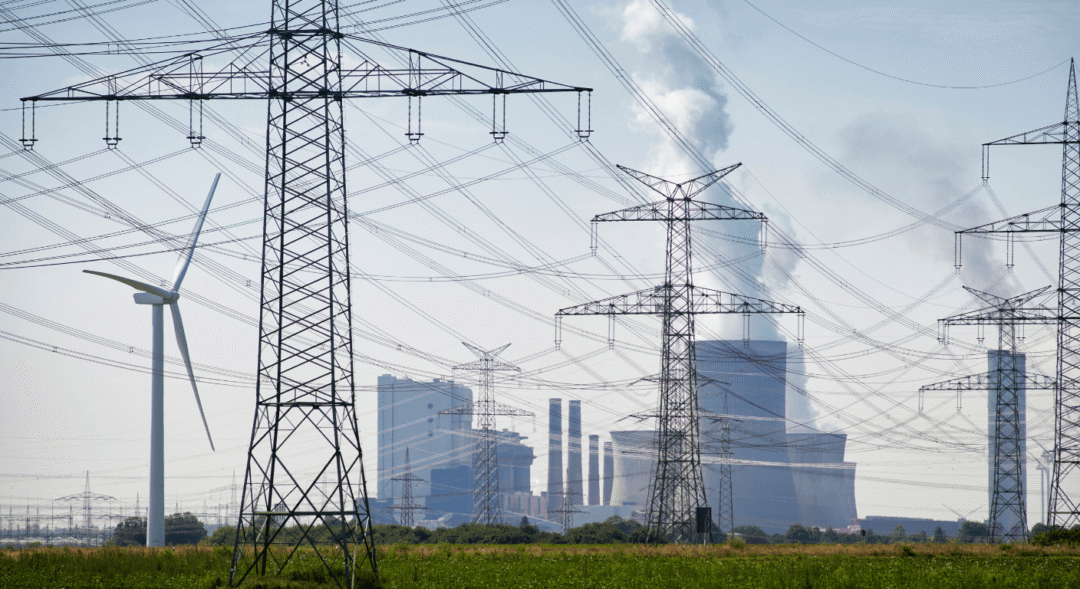
What is decentralised energy, and why does it matter now?
Decentralised energy is electricity generated at or near the point of use, rather than at a large central power station and transmitted over long distances. Rooftop solar, on-site battery storage, small-scale wind and hydro, and district heat networks all qualify. The defining characteristics are proximity to demand, smaller scale, and a much shorter path between generation and consumption. Three things make the case urgent in the UK right now:
- The first is cost. We pay some of the highest electricity prices in Europe, and a meaningful share of that bill is not generation at all, it is the cost of moving power around and reinforcing the network that does it. Generating on site sidesteps a large part of that.
- The second is resilience. A highly centralised energy system is, by definition, a concentrated target. Distributed generation is inherently harder to disrupt at scale.
- The third is the grid itself, and I will come back to it, because it is the part of this that I find most commercially interesting.
Decentralised, and democratised
Kirsty made a distinction in our conversation that has stayed with me. Decentralisation is a question of geography. Democratisation is a question of who benefits. As she put it, community energy is “about re-channelling the flow of money around the energy system and making it more democratised as well as decentralised.”
That is the part the market does not deliver on its own. A commercial developer will build a rooftop array and the returns will flow to shareholders who may have no connection to the building, the street or the town. A community energy group builds the same array and the returns flow back to the people who live there, either as investment interest, as cheaper power for the host, or as surplus recycled into energy advice for households who need it.
This also explains why community energy groups end up in the parts of the market nobody else wants. Kirsty described a rooftop developer who will not look at anything below 120kW. A community group will take that project happily. Community energy, she said, exists “to fill the gaps that nobody else wants”, and for commercial installers like us, that is a partnership opportunity, not a competitive threat. If a scheme is too small for a developer’s model, the sensible response is to hand it to the local group rather than let it die.

People assume a community energy group starts with a packed village hall. It does not. “You’re lucky if you can get four or five people together, to be quite honest,” Kirsty told me, and in her work building new groups with local authorities in Essex and St Albans, three or four founders is typical.
That last one is a personal hobby horse. I have watched proper governance transform organisations, the risk framework, the checks and balances, the discipline of a board that asks awkward questions. It is nobody’s favourite topic and it is the difference between a group that survives its first difficult year and one that does not.
On legal and financial expertise, the honest answer is that most groups buy it in or borrow it. Community Energy England runs a programme called Community Energy Go, and firms in the sector donate pro bono time. Lease and licence templates already exist in abundance. Kirsty’s advice on this was blunt and correct: “Plagiarise, plagiarise, plagiarise.” Do not reinvent documents that thirty other groups have already paid a solicitor to draft.
The well-trodden route is solar on a school or local authority building.
The community group raises the capital, owns and operates the array, and signs a long-term lease with the building owner. The host signs a power purchase agreement and buys the electricity generated on their own roof at below grid rates, typically saving between a third and two thirds of their bill. Because community benefit societies are asset-locked, the lease specifies that if the group ever folds, the asset transfers to a similarly asset-locked body, usually the school or council. That security is precisely why institutions are comfortable signing.
It sounds simple. Getting there is not, and the blockers are almost never on the roof:
1. The local authority. The climate officer will love it. Then it goes to legal, procurement, finance and the section 151 officer, who are under-resourced and often have no political mandate to say yes. Community Energy Pathways has produced a guide specifically to help councils navigate this.
2. The grid connection. The substation may not have headroom for the array you want. If you are the first mover, you may be asked to fund the upgrade, or find others who will share it.
3. Working capital. Grant funding covers feasibility. It rarely covers the people who do the work.
The innovation worth watching
Buckinghamshire’s current project, Energise Buckinghamshire, takes a different shape. It offers households solar and battery with no upfront cost, but unlike the credit-agreement models on the market, the community group owns and operates the array rather than lending against it. The household pays a monthly service charge set deliberately below their energy savings.
Two details make it clever. First, the target customer is the household that cannot access the conventional route: young families with large mortgages, no savings and sometimes no credit. Second, they deliberately oversize the battery, keeping headroom to trade in the flexibility markets and provide grid services. That extra revenue is what makes the numbers work.
The scheme needs to raise £2.3m to reach 200 homes. After that, Kirsty’s view is that surplus from those homes funds the next tranche, and the model becomes self-sustaining rather than grant-dependent.
why a hundred small batteries beat one big connection?
This is the part that made me sit up.
Ten kilowatts of storage in a hundred homes is one megawatt of dispatchable capacity, if you can aggregate the fleet. And as Kirsty pointed out, it is dramatically easier to connect a hundred domestic batteries than to secure a single one-megawatt grid connection.
Now consider what the distribution networks are facing. Every heat pump and every EV charger adds load. That means feeder cables, pole-mounted transformers, around £40,000 apiece, before the cabling, secondary substations, and in many cases the fuse in the house itself. The scale of reinforcement required across the country is enormous, and the DNOs’ next price control period from 2028 to 2033 is squarely focused on avoiding or deferring that spend.
Anything that flattens the peak is therefore worth real money to the system. Distributed solar-plus-storage does exactly that. My own scepticism is about the durability of the revenue: contracts are shorter than they were, and we can all see negative wholesale pricing in Spain as solar penetration rises. Kirsty’s answer is a fair one, build a floor and a ceiling into the model, and recognise that electricity has intrinsic value in a way few commodities do. Flexibility revenue in particular is structurally underpinned, because the peaking plant has to come off the system and electrified heat and transport are only going to increase demand.
Where does the money come from?
Community energy is funded predominantly by the community it serves, through a community share offer. The mechanics are worth understanding because they are unlike conventional equity:
- Shares are small, often £10 or £50, with a minimum holding of around £100 and a maximum of £100,000, so no single investor dominates.
- These are cooperatives. One member, one vote, regardless of holding. A £100 investor has the same say as a £100,000 investor, which is exactly why institutional money struggles with the structure.
- The board sets the interest rate, usually above bank rates to stay competitive, but retains the right to reduce or suspend it if the project hits trouble.
- Share value is nominal. Put in £100, withdraw £100. No capital volatility, though the board controls withdrawals to protect liquidity.
Kirsty calls this patient capital, and adds a word I liked: kind. Investors are getting a return, not making a donation, but they are accepting a slower, steadier one in exchange for something happening in their own town. Bonds through platforms like Ethex are the other common route. What the sector is still missing is social impact investors and, one day perhaps, pension money.
Does this only work in affluent areas?
No, and I asked directly, because it is an obvious concern. Repowering London has built successful schemes in genuinely deprived areas. Meanwhile there are wealthy rural districts with terrible grid connections and market towns with a complete mix of housing stock.
What determines success is having the right people with the enthusiasm to drive it. As Kirsty put it, every locale has a rooftop that could take solar and a fuse box that could take a battery.
The related warning is about echo chambers. Groups develop obsessions, hydro because there is a river, wind because someone loves turbines. Her advice: remember you are not the target audience. Look at what your community actually needs.
Will GB Energy deliver 1,000 schemes by 2030?
Cautiously, yes, with caveats.
The encouraging signs are real. Community energy is embedded in the Warm Homes Plan, the Local Power Plan and Clean Power 2030, and the people running local energy strategy at GB Energy understand the sector from the inside rather than from a spreadsheet.
The caveats are worth stating plainly. Nearly £1bn across 1,000 schemes is around £1m per scheme, which points at large projects, and larger still if GB Energy is only co-funding. There is also a risk of yet more money going into feasibility studies that restate what the sector already knows.
The more useful intervention, in Kirsty’s view and mine, would be low-cost or no-cost loans. Lend Energise Buckinghamshire its £2.3m and you get 200 homes and a self-sustaining vehicle that keeps going without further public money. Grant the same sum and you get 200 homes. The difference compounds.
The other thing that has to work is the local authority relationship. Councils are the intended recipients of much of this funding, and that makes sense, they have the buildings and the convening power. But it only works as a partnership. If councils take the money and deliver in-house, the community sector gets bypassed, and the co-benefits that come from local ownership go with it.
If you want to get involved
Kirsty’s advice was characteristically direct: find your local community energy group and get involved. If there isn’t one, start one, but don’t do it alone. Community Energy England has extensive resources. Community Energy Pathways works with local authorities to build capacity and can help with grant applications. And borrow everything. There is no prize for inventing a lease from scratch.
Decentralised energy is going to happen either way, the economics and the grid constraints both point the same direction. What is still genuinely open is whether the value it creates stays local. Community energy is the mechanism that decides that, which is why it deserves more attention than it currently gets from those of us on the commercial side of the industry.
At EvoEnergy we spend our time designing and installing commercial solar, solar battery storage and EV infrastructure for businesses across the UK. If you are running a community scheme that needs technical delivery, or a business wondering whether your roof could be doing more, get in touch.
Frequently asked questions
What is decentralised energy?
Decentralised energy is electricity generated at or near the point where it is used, rather than at a large central power station and transmitted over long distances. Rooftop solar, on-site battery storage, small-scale wind and hydro, and district heat networks all fall within it. The defining features are proximity to demand, smaller scale, and a shorter path between generation and consumption.
What is the difference between decentralised energy and community energy?
Decentralised energy describes where the electricity is generated. Community energy describes who owns it. A commercial developer’s rooftop array is decentralised but not community-owned; a school roof financed by local shareholders through a community benefit society is both. Community energy is one delivery route for decentralised generation, the one that keeps the financial benefit local.
How much does it cost to start a community energy scheme?
Setting up the legal entity itself is modest, registering a community benefit society costs in the low hundreds, and template rules and leases are freely shared across the sector. The real cost is the project. Feasibility work is often grant-funded, and capital for the array is typically raised through a community share offer rather than paid for upfront by the founders.
How do community energy schemes make money?
Most revenue comes from selling generated electricity to the host building under a long-term power purchase agreement, at a rate below what they would pay their supplier. Export income and, increasingly, flexibility and grid services revenue from battery storage supplement that. Surplus is typically reinvested into new projects or community energy advice rather than distributed as profit.
Is investing in a community energy scheme a good idea?
It is an investment rather than a donation, but a patient one. Community shares hold nominal value, put in £100, withdraw £100, so there is no capital volatility, and interest rates are usually set above bank rates to stay competitive. The trade-offs are that the board can reduce or suspend interest if the project struggles, and can restrict withdrawals to protect liquidity. This is not financial advice; always read the share offer document.
What is GB Energy’s Local Power Plan?
The Local Power Plan is the mechanism through which GB Energy supports locally owned and community-owned generation. It carries a budget approaching £1bn for around 1,000 schemes, with the stated aim that everyone in the UK has access to a community energy scheme by 2030. Community energy also features in the Warm Homes Plan and Clean Power 2030.
Do community energy schemes only work in wealthy areas?
No. Repowering London has delivered schemes in genuinely deprived parts of the capital, while some affluent rural districts are held back by weak grid connections. What determines success is having a handful of committed people and a willing building owner, not local incomes. Every area has a rooftop that could take solar and a fuse box that could take a battery.
About the Author
Mark Wakeford is Chairman of EvoEnergy bringing decades of experience across engineering, construction and renewable energy. He plays a key role in shaping EvoEnergy’s long-term strategy while contributing to the wider development of the UK solar industry, with particular focus on skills, supply chain resilience, industry standards and the transition to net zero.
Executive Strategy
Corporate Governance & Board Advisory
Industry Collaboration
Thought Leadership
Public Speaking